The world’s most spectacular waterfall
There are places you visit and places that visit you back.
Iguazu Falls is the second kind.
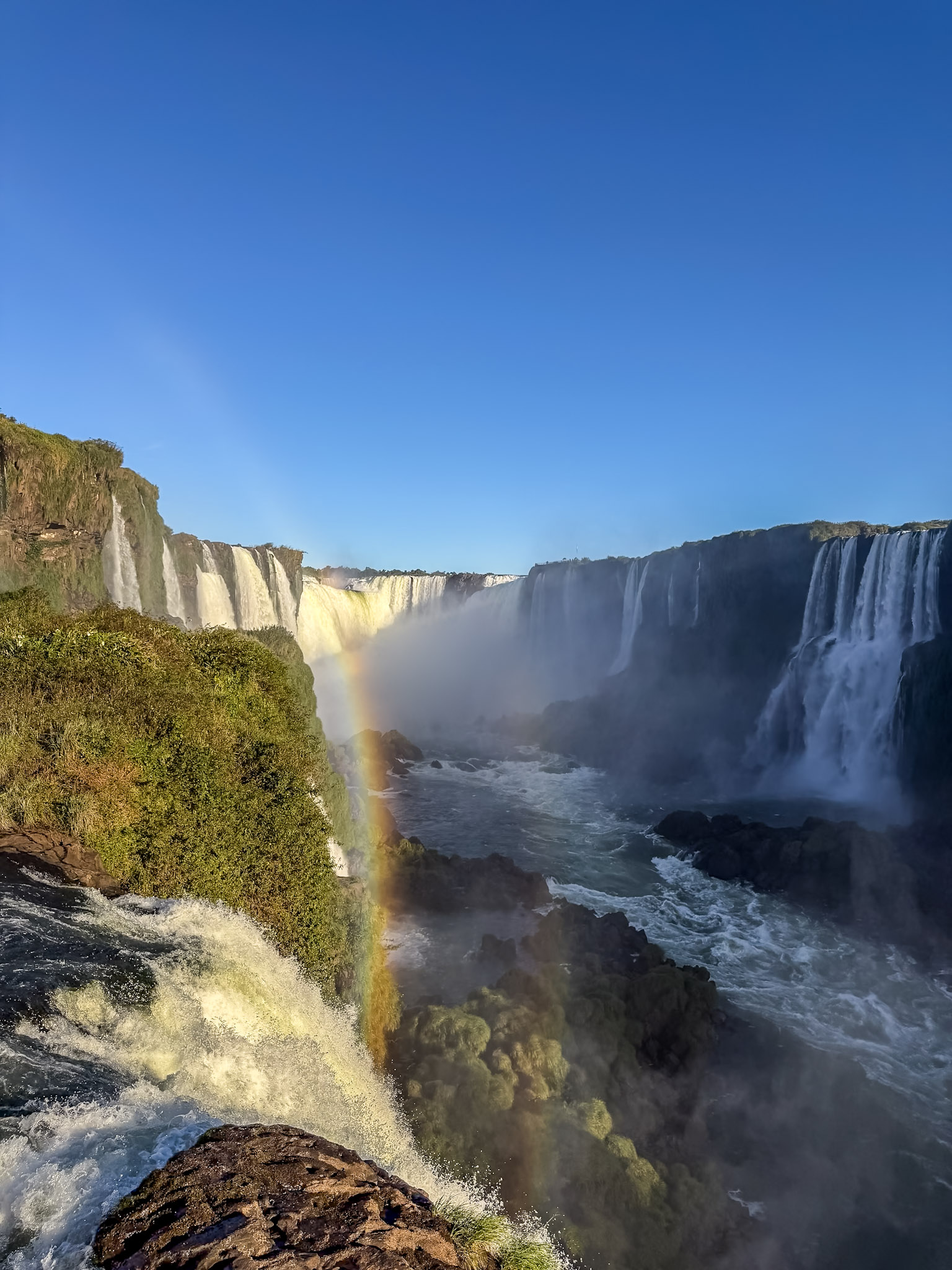
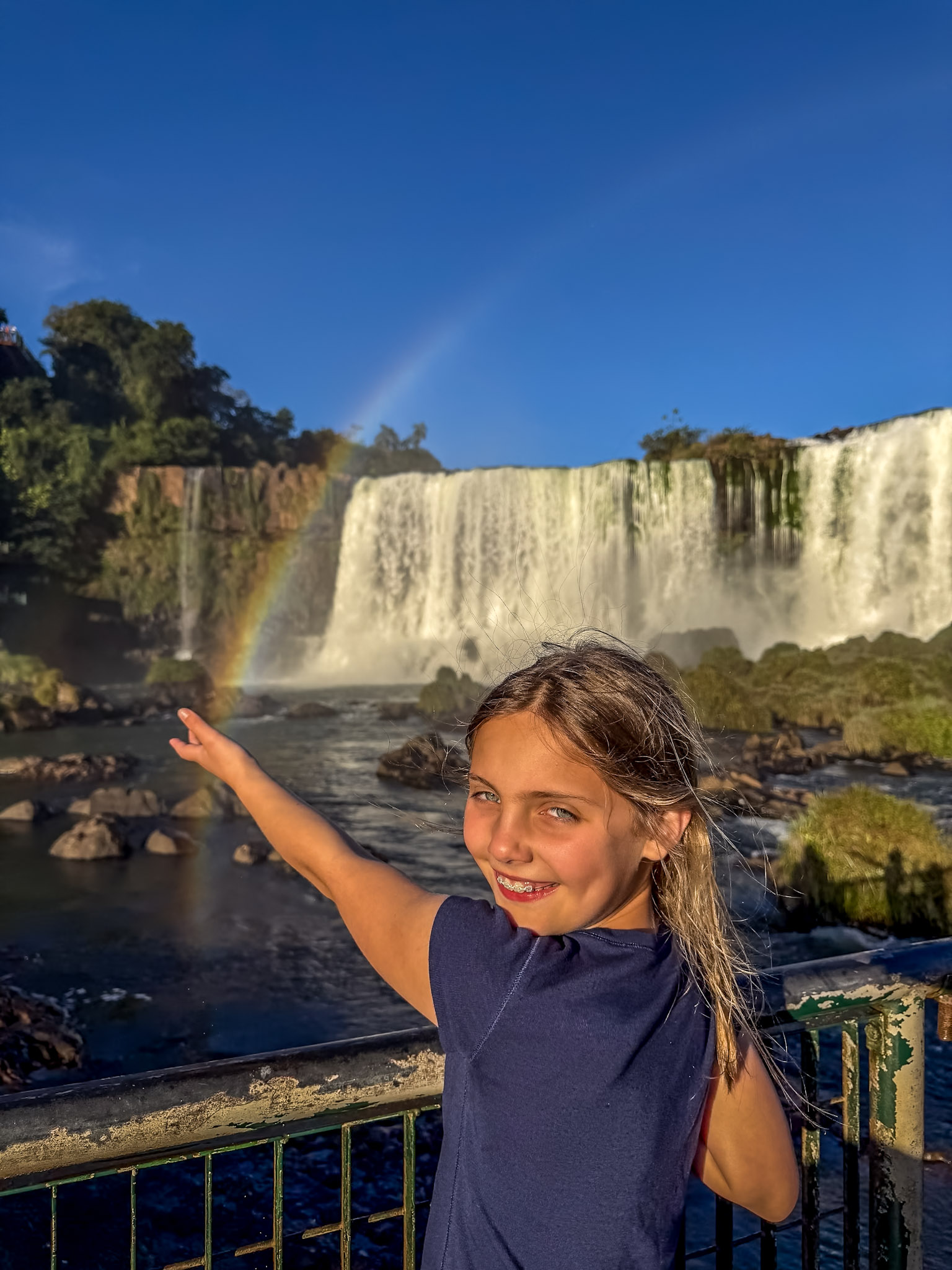
I’m not being dramatic. Eleanor Roosevelt stood here and said “Poor Niagara.” I completely understand. Nothing prepares you for it — not the photos, not the videos, not the superlatives. You round a corner, hear it before you see it, and then the whole thing opens up in front of you and you just… stop.
I did this trip solo with Hayleigh and Keith, joined by my friend — also solo — with her three kids. Five children between us, ages 5, 6, 8, 8 and 10. Two mums, no backup, one of the natural wonders of the world.
Here’s everything you need to know before you go.


Getting There
Getting to Iguazú Falls is surprisingly easy. The easiest route is flying from Buenos Aires directly to Iguazú Falls, with multiple short daily flights available from both Aeroparque (AEP) and Ezeiza (EZE). The flight is just under two hours, making it a very simple add-on to any Argentina itinerary.
If you are coming from Uruguay, you have a few easy options. You can either fly from Montevideo or Punta del Este into Buenos Aires and connect onward to Iguazú Falls, or take the ferry from Colonia del Sacramento or Montevideo to Buenos Aires and then catch a domestic flight north. We personally loved combining Uruguay, Buenos Aires, and Iguazú into one trip — it made for a really easy and seamless South America itinerary.
how long you need to visit
Two nights minimum. One full day on each side.
That’s the non-negotiable. You need the Argentina side AND the Brazil side — they are completely different experiences and you cannot skip either. Anyone who tells you it can be done in a day is wrong, or they only saw half of it.
Two nights gives you one full day per side, a proper night’s sleep in between, and enough time to actually feel it rather than rush it. You’ll be glad you stayed.
Day 1: The Argentina side
Argentina has 80% of the falls within its national park, and the trail system takes you right to the edge — above them, beside them, meters away from the most powerful curtain of water you’ve ever seen.
Plan for a full day — around 5 hours in the park is the sweet spot. You can do all three hikes comfortably without rushing, and with five kids in tow, we still managed it beautifully.
You need two things: your national park entry ticket (buy online in advance — don’t leave it to the day) and a free train ticket, collected at the park entrance. The train ticket costs nothing but is still required.
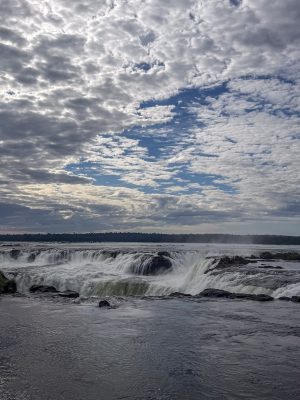
everything you need to do on the argentina side
There are three hikes, and you have to do them all.
Garganta del Diablo — Devil’s Throat
Distance: 2.2km · Time: ~1 hour · Difficulty: Easy
Do this one first. The train takes you directly to the trailhead — a flat, elevated walkway stretching out over the river, ending at the most spectacular viewpoint on either side of the falls. The noise hits you before you get there. The spray hits you at the end. It is completelyworth getting wet.
“The train takes you right to the edge of the Devil’s Throat. Nothing else compares. Do this first, before the crowds arrive.”
Upper Circuit — Circuito Superior
Distance: 2.4km · Time: ~30–45 minutes · Difficulty: Easy
A walkway above the falls giving you panoramic views looking down over the whole system. Six lookout points, all different, all worth stopping at. This is where you start to understand just how enormous Iguazu actually is.
Lower Circuit — Circuito Inferior
Distance: 2.2km · Time: ~1 hour · Difficulty: Easy
My favourite. This one takes you through the falls — underneath them, alongside them, close enough that you’ll be soaked before you’re halfway around. This is where you feel the scale of it physically. Go slow. Soak it in. Literally.
the train — your best friend
Three stations connect the park: Central Station near the entrance, Cataratas Station for the upper and lower circuits, and Garganta del Diablo for the Devil’s Throat trail. The train runs every 15–20 minutes, it’s free, and it makes the whole day genuinely easy to navigate, especially with kids. Just remember to collect your free ticket at the entrance. Still required.
the boat ride — know the rules first
The Argentina boat ride takes you right under the San Martín waterfall and it is spectacular.But if you’re travelling with younger kids, check this carefully: the minimum age on the Argentina side is 12 years old. Strict. They check. If you have children under 12, save the boat for the Brazil side — no age restriction there.
The Gran Meliá Iguazú sits inside the national park itself. Staying here means you get access before the park opens to anyone else — you could be on the first train to the Devil’s Throat before a single other visitor arrives. The balcony views alone are worth every peso.
Day 2: The Brazil side
This is where you see the whole picture.
The Brazil side is more developed, more commercial, more built up than Argentina. The infrastructure is slicker, the facilities are better, and the single trail gives you the most epic panoramic view of the entire falls system. You’re not inside it the way you are in Argentina. You’re looking at it. And what a thing to look at.
But here’s what nobody tells you upfront. The Brazil side is line dependent. Like, significantly. Know what you’re walking into.
a word on what’s coming
The Brazil side has a major construction project currently underway, with significant changes expected by 2030. The falls themselves don’t change — but the experience around them will look very different in a few years. If you can go before then, do.
the border crossing
Don’t stress about this. It’s very easy.
Show your passport, wait a few minutes, done. Taxis and organised transfers handle this crossing regularly. Just make sure every member of your party has their passport, including the kids and you’re good.
thr bird park - start here
Before you even enter the national park, visit the Parque das Aves — the bird sanctuary right at the park entrance. Over 1,500 birds, many of which you can walk right through enclosures with. Toucans, macaws, flamingos. Extraordinary and consistently underestimated. All five of our kids were completely obsessed.
Brazil boat logistics & review
How the boat actually works — the honest version
The boat ride is incredible. No age restriction, everyone gets on, you get completely soaked, it’s one of those memories nobody forgets. But I want to be really honest about how it works, because we were not fully prepared for the process.
It goes like this:
- Step 1. Get your national park ticket from a kiosk at the entrance — this has a timed entry slot. You cannot enter without it.
- Step 2. Once inside, find the boat ticket counter and buy your boat ticket separately.
- Step 3. Join the line for the buses into the park. We waited for three buses to pass before we got on. In regular season. Not high season. Three buses.
- Step 4. Get off at the boat bus stop, show your ticket
- Step 5. Join the line for the safari vehicle that drives you down to the water.
- Step 6. Use the lockers to store your belongings. You will get completely soaked.
- Step 7. Join the line for the funicular down to the boat dock.
- Step 7. And then — yes, one more — join the line to board the actual boats.
“We waited for three buses before we got on. In regular season. High season? I genuinely cannot imagine.”
The whole process from arrival to actually being on the water took us a couple of hours. Five kids in tow, lots of waiting. The kids were absolute troopers — all of them — but go in with your eyes open.
the trail & the elevator
Walk the trail in the afternoon — the light is softer and the crowds have thinned. The path runs along the canyon wall giving you uninterrupted panoramic views of the Argentine falls across the gorge. End at the elevator for the final sweeping views. It’s the perfect way to close out the day.
brazil side: real talk for families
In high season or on weekends, the Brazil boat experience could eat your entire day in lines alone. Go on a weekday. Arrive when the park opens. Bring snacks and water. Build your whole day around the boat process and don’t try to rush it.
lunch at the belmond
The Belmond Hotel das Cataratas sits inside the Brazilian national park — the only hotel that does — and even if you’re not staying, stop for lunch. Beautiful old colonial building, excellent food, and sitting there in the middle of the jungle with the sound of the falls in the background is a memory that sticks.
Want the park to yourself on the Brazil side? Stay here. Same logic as the Meliá on the Argentina side. Early access. The trail at dawn. Nobody else around.
the trail & the elevator
Walk the trail in the afternoon — the light is softer and the crowds have thinned. The path runs along the canyon wall giving you uninterrupted panoramic views of the Argentine falls across the gorge. End at the elevator for the final sweeping views. It’s the perfect way to close out the day.
lunch options on the brazil side
At the entry and at the falls you have food options, nothing fancy, think chicken nuggets, snacks, ice cream, empanadas, and coffee. We needed to slow down, sit and have a real lunch so we opted for lunch at the Belmond Hotel das Cataracts.
The Belmond Hotel das Cataratas sits inside the Brazilian national park — the only hotel that does — and even if you’re not staying, stop for lunch. Beautiful old colonial building, excellent food, and sitting there in the middle of the jungle with the sound of the falls in the background is a memory that sticks.
Want the park to yourself on the Brazil side? Stay here. Same logic as the Meliá on the Argentina side. Early access. The trail at dawn. Nobody else around.
the trail to the falls & the elevator viewing point
Walk the trail in the afternoon — the light is softer and the crowds have thinned. The path runs along the canyon wall giving you uninterrupted panoramic views of the Argentine falls across the gorge. End at the elevator for the final sweeping views. It’s the perfect way to close out the day.
traveling with kids
Can you do this with children?
Yes. Absolutely, emphatically yes.
We had five kids between us. Ages 5, 6, 8, 8 and 10. Two solo mums, no other adults, two full days in two national parks across two countries.
They were brilliant. Every single one of them. The trails are flat and well-maintained, the distances are manageable, and the falls are so spectacular that even a 5-year-old is completely captivated. Our youngest walked every step and didn’t complain once.
The bird park is a highlight for kids especially — walking through an enclosure while toucans fly overhead is the kind of thing they’ll still be talking about years later. And getting soaked on the boat ride is basically the greatest thing that has ever happened to any child, ever.
“Two solo mums. Five kids. Ages 5 to 10. They were absolute troopers — every single one.”

the quick guide
what you need to know
How long: Two nights minimum. One full day per side.
Argentina tickets: Buy your national park entry ticket online in advance. Collect your free train ticket at the park entrance — still required.
Brazil tickets: National park ticket from the kiosk on arrival (timed entry slot). Buy your boat ticket separately at the counter inside.
Boat age limit Argentina: Minimum 12 years old. Strict. They check.
Boat age limit Brazil: No age restriction. Everyone gets on.
The three Argentina hikes: Devil’s Throat (2.2km, ~1hr), Upper Circuit (2.4km, ~45min), Lower Circuit (2.2km, ~1hr). All easy. All worth doing.
The Brazil lines: Build your whole day around them. Weekday if possible. Arrive early. Bring snacks. In high season, waits are long.
Border crossing: Easy. Passports for everyone including kids.
Skip the crowds Argentina: Stay at the Gran Meliá Iguazú.
Skip the crowds Brazil: Stay at the Belmond Hotel das Cataratas.
Don’t miss: The bird park. Seriously.
Wear: Clothes you don’t mind getting soaked. On both sides.


Where to stay
where to stay
There are hotels near Iguazu Falls. And then there are these two.
If you’re going to make the trip — and you absolutely should — do it properly. Both sides of the falls have one standout property that isn’t just a place to sleep. They’re part of the experience itself.
gran meliá iguazú — argentina side
The Meliá sits inside the Argentine national park. Not near it. Not a short drive from it. Inside it.
What that means in practice: when the park gates open every morning and the crowds start pouring in, you’re already there. You can be on the first train to the Devil’s Throat before a single day visitor has even bought their ticket. The falls at dawn, in near silence, with nothing but the mist and the birds — it’s a completely different experience from anything a day visitor gets.
The rooms look out over the jungle canopy. You fall asleep to the sound of the falls. You wake up to the same.
If you only stay on one side, make it here.
belmond hotel das cataratas — brazil side
The Belmond is the only hotel inside the Brazilian national park. The only one. A beautiful colonial building painted blush pink, surrounded by jungle, with the falls a short walk from the front door.
Same logic as the Meliá — staying here means early access before the park opens to the public. The trail at dawn with nobody else on it. The panoramic views with nothing but birdsong.
Even if you’re not staying, stop for lunch. The setting alone is worth it — and the food is excellent. But if you can swing a night here, do.
The kind of place that makes the whole trip feel like a proper occasion.
the honest version
Both properties are a splurge. Neither is a budget option. But Iguazu Falls is not an everyday destination — most people do this trip once. Spending a little more to be inside the park rather than outside it is, in my opinion, absolutely worth it.
You came this far. Stay somewhere that makes it unforgettable.
getting around
getting around
The good news first — inside the parks, transport is sorted for you.
On the Argentina side, the train does all the heavy lifting. It connects the three main stations — Central, Cataratas and Garganta del Diablo — runs every 15–20 minutes and is included in your park entry. With kids, this is a dream. Nobody is walking further than they need to, nobody is complaining about tired legs, and the logistics of a big day in a big park become genuinely manageable. Just remember your free train ticket from the entrance.
On the Brazil side, buses shuttle you through the park between the main stops. They run regularly and again, it’s all included. The system works — it’s just the lines for those buses that’ll test your patience. But the transport itself? No complaints.
between argentina and brazil
Getting between the two sides is easier than it sounds. A taxi or a hired driver is the way to go — they handle the border crossing regularly and know exactly what to do. You show your passport, wait a few minutes, and you’re through.
We hired a driver and I’d recommend it, especially with kids. One less thing to think about when you’re managing small humans across an international border.
a very important note on where you stay
We stayed on the Argentina side — and if you’re a solo parent, I’d strongly recommend you do the same.
Here’s why. If you choose to stay on the Brazil side, you’ll need a visa. And the visa process for a solo parent travelling with children is, to put it kindly, a whole beast.
The additional documentation, the declarations, the proof of sole custody or permission from the other parent — it’s a significant administrative undertaking on top of an already complex trip. It’s absolutely doable, but go in with your eyes open and start the process well in advance.
Staying on the Argentina side sidesteps all of that entirely. You do the border crossing as a day trip for your Brazil day — in and out, passport stamp, done — without the visa requirements that come with an overnight stay.
<div class=”omm-tip”> <div class=”omm-tip-label”>Solo parent tip</div> If you are a solo parent or travelling without the other guardian, research the Brazil visa and entry requirements for your nationality well before you book. Requirements vary and the process takes time. Staying on the Argentina side and doing Brazil as a day trip is the simpler option — and honestly, the Argentina side is spectacular enough to base yourself there. </div>
Final thoughts
Iguazu Falls is the kind of place that recalibrates everything. You go home and waterfalls just look a bit different. A bit smaller. A bit quieter.
Everything is a little bit Poor Niagara after this.
Two mums, five kids, two countries, two days. Not one moment any of us will forget.
Worth every single second. Worth every single line.
— Summer